before the Second World War
Reg’s Early Friendship
The narrator and [Reg Cavendish](entity:character-recall-character-reg-cavendish-464731e265db) became close at school: the quiet, observant Reg understood the countryside and natural history, while the narrator supplied much of the talk. Their temperaments made them companions long before intelligence work and war gave their friendship a harsher setting.
Reg’s steadiness and gentleness later became inseparable, in the narrator’s memory, from the courage he showed as a soldier. The friendship also explains why the narrator remained close to Reg’s father, [Charlie Cavendish](entity:character-recall-character-charlie-cavendish-912e105ed078).
during the Second World War
Reg’s Combat Years
Reg became a notably young regimental sergeant major and survived the slaughter around Longstop Hill, where a lorry struck a mine and only a few men from his group returned. Later, during the Sicily landings, Allied fire mistakenly hit the airborne force; Reg survived the crash and received a decoration, but came back changed and increasingly burdened by the dead.
On [D-Day](entity:time-recall-time-d-day-55a5d5d66b9e) he led men through difficult terrain, and at Arnhem he again survived an operation that cost the force heavily. The narrator’s account presents Reg’s endurance as both extraordinary and costly, a history that makes his eventual death feel especially arbitrary.
during the Mediterranean War
Medway II Recovery
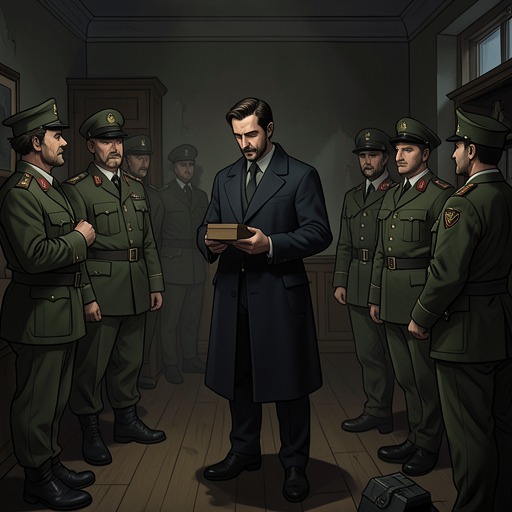
While [Beirut](entity:location-recall-location-f3403693d2fd) served as the submarine base Medway II, the narrator took part in a secret recovery mission after the German submarine U.307 was sunk. A newly installed infrared sighting device was salvaged from the flooded submarine and carried back to [London](entity:location-recall-location-london-420923d4a60a).
The narrator later recalled meeting [Ross](entity:character-recall-character-ross-05695d7833ca) after the mission. The episode belongs to the older intelligence world that shaped their careers, and it establishes that their professional connection began long before the [IPCRESS](entity:concept-recall-concept-ipcress-ef8aee5d80fd) affair.
August 1949
Joe One Discovery
A [United States Air Force](entity:organization-recall-organization-4817d1c59cf0) crew flying a cosmic-ray survey discovered evidence of an unexpectedly intense radiation event over the Pacific. Follow-up sampling established that the Soviet Union had conducted a plutonium atomic-bomb test, overturning American estimates of how many years away such a weapon remained.
[Ross](entity:character-recall-character-ross-05695d7833ca) had prepared for the possibility: his contacts and intelligence work let him provide [London](entity:location-recall-location-london-420923d4a60a) with early confirmation and information about Soviet scientists. The success made his reputation and helped establish the authority he would later wield inside British intelligence.
from the Second World War through the 1950s
Jay’s Intelligence Career
[Jay](entity:character-recall-character-jay-254ab4914272)’s allegiances shifted with the political upheavals around him. His record included work for Polish intelligence, a possible deal with the German [Abwehr](entity:organization-recall-organization-25dd86e8338d), and later activity amid the competing intelligence services and political factions of postwar Poland.
By the time he settled in [London](entity:location-recall-location-london-420923d4a60a), Jay had learned to sell information and people to whoever would pay. His eventual scheme would build on that opportunism: he would arrange for valuable people to be taken and manipulated, then profit from their access and expertise.
May 1951
Burgess and Maclean’s Flight
During the period of the [Burgess and Maclean defections](entity:event-recall-event-973a9d3ae60b), [Jay](entity:character-recall-character-jay-254ab4914272)’s movements intersected with theirs. On 25 May 1951, Burgess and Maclean left England on a cross-Channel trip with Jay; only Jay returned.
Later payments passed through Swiss banks and were associated with Jay, though the narrator’s department had no proof that Jay had committed an illegal act in Britain. The unexplained connection became one of the clues that made Jay both valuable and deeply suspect.
after the main investigation
The Minister’s Secret Briefing
The novel is framed as the narrator’s account to a Minister who wants a personal version of the events rather than a summary of the official dossier. The narrator warns that the story is confusing and asks to give it without interruption.
The Minister accepts the arrangement, and the narrator begins with his first encounter with [Jay](entity:character-recall-character-jay-254ab4914272). This retrospective framing makes the account itself part of the spy story: the narrator knows that memory, self-justification, and official records do not perfectly agree.
January, early in the story
Transfer to Dalby’s Unit
After completing his Army service, the narrator is released from [Ross](entity:character-recall-character-ross-05695d7833ca)’s Military Intelligence environment and assigned to [WOOC(P)](entity:organization-recall-organization-wooc-p-eab7f314f01d), the small, powerful unit run by [Dalby](entity:character-recall-character-dalby-5a59a32bd6e9). The move strips away much of his formal military identity and places him in a ramshackle [Soho](entity:location-recall-location-soho-2b44f60b5e8d) operation whose authority reaches directly to the Cabinet.
At [Charlotte Street](entity:location-recall-location-charlotte-street-2c2cc5deb7fc), the narrator learns the unit’s routines: surveillance films, coded files, and Dalby’s insistence that staff study their adversaries. His new position brings greater responsibility, but also leaves him working among people whose motives and loyalties are difficult to read.
January, six and a half weeks before the assignment
Scientists Begin Disappearing
[Dalby](entity:character-recall-character-dalby-5a59a32bd6e9) tells the narrator that senior British scientists have been vanishing, including a biochemist who failed to reach his laboratory that morning. The Home Office has kept the disappearances quiet, but eight important people have disappeared in a short span.
Dalby suspects [Jay](entity:character-recall-character-jay-254ab4914272) is organizing the kidnappings and sees a chance to exploit the Home Office’s failure. Instead of simply trying to find the missing scientist, he orders the narrator to buy [Raven](entity:character-recall-character-raven-159e53afa183) back from whoever is holding him, alive and undamaged.
January, shortly after the new disappearance
The Buyback Assignment
[Dalby](entity:character-recall-character-dalby-5a59a32bd6e9) authorizes a payment of £18,000, with permission to go higher if the kidnappers prove genuine. The offer is to be paid after delivery through a Swiss bank, and the narrator is told not to contact Dalby if the operation goes wrong.
Surveillance has already located [Jay](entity:character-recall-character-jay-254ab4914272) at [Lederer’s coffee-house](entity:location-recall-location-lederer-s-coffee-hou-871d90f29345). The narrator is sent there with little guidance and must approach a dangerous intermediary whose face he knows only from repeated covert films.
January, the following Tuesday
The Approach at Lederer’s
The narrator finds [Jay](entity:character-recall-character-jay-254ab4914272) at Lederer’s, where [Housemartin](entity:character-recall-character-housemartin-bfbdc88acf3f) is also present. Rather than make a formal introduction, he invents the name Stanley Beamish and says that he has a financial proposition.
Jay refuses to be hurried and insists that the narrator take him to lunch. The casual, almost comic negotiation disguises the danger of the task: the narrator is trying to buy a kidnapped scientist from men who may already be planning a different use for him.
January, during the same meeting
The Strip-Club Warning
[Jay](entity:character-recall-character-jay-254ab4914272) leads the narrator and [Housemartin](entity:character-recall-character-housemartin-bfbdc88acf3f) to the [Barbarossa Club](entity:location-recall-location-barbarossa-club-6e63fc7db41d), where they watch a strip show while Jay disappears upstairs. A cigarette girl quietly tells the narrator to go home, warning that nothing can be gained there.
The narrator ignores her and searches the upper floors. Through glass panels in an observation room, he sees a man lying in a gaming room below and recognizes him as [Raven](entity:character-recall-character-raven-159e53afa183). The warning and the hidden room suggest that the meeting is not the straightforward purchase [Dalby](entity:character-recall-character-dalby-5a59a32bd6e9) imagined.
January, minutes after Raven is spotted
Raven’s Escape from the Club
The narrator breaks the observation-room glass by dropping a typewriter through it, then climbs down into the gaming room. [Housemartin](entity:character-recall-character-housemartin-bfbdc88acf3f) has already carried the unconscious [Raven](entity:character-recall-character-raven-159e53afa183) away, and a police raid is announced over the club loudspeakers.
Escaping through a service passage into a restaurant, the narrator discovers a new hypodermic syringe in his pocket. The cigarette girl’s warning now seems more significant: someone may have intended for the narrator to be found beside Raven and implicated in the operation.
the Thursday after the club incident
The Changed Identity Papers
After reporting the failed approach through the secret telephone exchange, the narrator is instructed to change his papers. The process replaces the documentary trail of his former life, including identity records, and takes several days.
The elaborate procedure shows the machinery behind [WOOC(P)](entity:organization-recall-organization-wooc-p-eab7f314f01d)’s covert work. It also prepares the narrator to travel under [Raven](entity:character-recall-character-raven-159e53afa183)’s identity, though the operation is not explained to him in full.
the following Monday
The Beirut Cover Assignment
[Alice](entity:character-recall-character-alice-c37947fad76f) meets the narrator in a car and gives him travel documents, a passport, tickets, and a message directing him to collect a case at the airport. The instructions identify [Raven](entity:character-recall-character-raven-159e53afa183) as his assumed identity and send him from [London](entity:location-recall-location-london-420923d4a60a) to [Beirut](entity:location-recall-location-f3403693d2fd).
At the airport, the narrator notices [Ross](entity:character-recall-character-ross-05695d7833ca) in the crowd and recognizes that his new journey is connected to a wider intelligence operation. A man posing as an airline crew member has arranged a weapon and other equipment for him, while a fellow passenger secretly carries photographs of Raven and the narrator himself.
the same day, during the flight
The Flight to Beirut
On the flight, the narrator discovers that the supposedly harmless, heavy passenger beside him is connected to the surveillance operation. The man has photographs of [Raven](entity:character-recall-character-raven-159e53afa183) and a photograph of the narrator, confirming that he is being watched and that his cover has been compromised.
A driver meets him in [Rome](entity:location-recall-location-f3877a21016f) and warns that the passenger’s seat is trouble. The narrator continues onward to [Beirut](entity:location-recall-location-f3403693d2fd), carrying a briefcase that has been cut open by a professional burglar and collecting further equipment under covert instructions.
the day after the flight
Weapons in Beirut
In [Beirut](entity:location-recall-location-f3403693d2fd), the narrator opens his luggage and finds a [sticky bomb](entity:object-recall-object-dbfb76621141), a revolver, ammunition, and a concealed holster. The gear confirms that the assignment is not merely a negotiation or recovery operation.
He travels into the mountains with [Dalby](entity:character-recall-character-dalby-5a59a32bd6e9)’s team and takes up a lookout position on the road between [Lebanon](entity:location-recall-location-lebanon-77be8160c97f) and [Syria](entity:location-recall-location-7cb706bcaa34). The narrator does not yet know whether the plan is to intercept [Raven](entity:character-recall-character-raven-159e53afa183) or to prevent him from being moved beyond reach.
3:32 a.m., during the operation in Lebanon
The Mountain Ambush
The team spots a large car approaching along the mountain road. [Dalby](entity:character-recall-character-dalby-5a59a32bd6e9) throws a [sticky bomb](entity:object-recall-object-dbfb76621141) at it; the explosion sets the vehicle alight, and the team blocks its path with another car before pulling [Raven](entity:character-recall-character-raven-159e53afa183) from the wreckage.
A second vehicle appears, and the narrator realizes the operation has drawn unwanted attention. He uses another bomb against it, then joins the group at the burning cars. The smell, the flames, and the dead men make clear that the recovery has been bought with lethal violence.
dawn after the mountain ambush
Raven Taken Alive
[Raven](entity:character-recall-character-raven-159e53afa183) is found alive but in shock. [Dalby](entity:character-recall-character-dalby-5a59a32bd6e9) gives him morphine, and the group removes their overalls and burns them to conceal evidence of the operation.
Dalby identifies the dead men as American naval intelligence personnel who were apparently attempting a similar interception. The narrator recognizes that the mission has become an international incident, with both British and American services pursuing the same captive.
the days following the ambush
Raven Held at Baalbek
The team hides [Raven](entity:character-recall-character-raven-159e53afa183) at a discreet villa near [Baalbek](entity:location-recall-location-0c36392e6cc1), under the care of the doctor [Painter](entity:character-recall-character-painter-edb645eb2b67). [Dalby](entity:character-recall-character-dalby-5a59a32bd6e9) explains that [Jay](entity:character-recall-character-jay-254ab4914272) finances a research unit in [Aargau](entity:location-recall-location-85c4220ccbbb) studying how a person’s behavior changes according to the environment around him.
The idea of a “synthesized environment” offers an early hint of the larger operation: people can be shaped by controlled surroundings. While they wait for transport, the narrator learns how deeply Dalby’s informants and local arrangements reach into the region.
during the stay near Baalbek
Adem’s Hidden Work
The narrator spends time with [Adem](entity:character-recall-character-adem-4bd970870cb4), an experienced local intelligence source who knows the region and its networks. [Dalby](entity:character-recall-character-dalby-5a59a32bd6e9) explains that Adem’s service is maintained through paid expenses rather than direct cash, a system that keeps him both useful and dependent.
Their conversations range from local wildlife to the landscape and its history. The narrator’s quiet connection with Adem provides a counterpoint to the brutal operation and reveals the human relationships that sustain intelligence work beyond official institutions.
three days after the ambush
Raven’s Naval Transfer
After radio contact is established with a Royal Navy destroyer, [Raven](entity:character-recall-character-raven-159e53afa183) is brought out of isolation and made to join the group for dinner. He is weak but composed, presenting himself as an English professional rather than a helpless captive.
[Adem](entity:character-recall-character-adem-4bd970870cb4) pilots a helicopter carrying Raven and [Painter](entity:character-recall-character-painter-edb645eb2b67) to the destroyer offshore. Raven leaves British hands, but the operation has not resolved the disappearances or exposed why the missing scientists are being taken.
spring, after the Raven operation
Carswell’s Statistical Pattern
[Dalby](entity:character-recall-character-dalby-5a59a32bd6e9) assigns [Carswell](entity:character-recall-character-carswell-7778d5bb8db4) to analyze the disappearances and related security data without directing him toward a preconceived answer. Carswell and his assistant [Murray](entity:character-recall-character-murray-116551669049) identify unusual concentrations of senior security-cleared people, as well as areas where such people seem temporarily absent.
The narrator is skeptical of the statistical categories, including “concens” and “evacs,” but pins up Carswell’s profile of the affected group. That work will eventually point toward the network’s methods and help connect scattered anomalies to a deliberate scheme.
spring, while the narrator reviews Jay’s file
Jay’s Double-Crossing Past
A newly released file reveals that [Jay](entity:character-recall-character-jay-254ab4914272), under his Polish identity, worked across shifting wartime and postwar loyalties. His record includes dangerous missions, a possible agreement with the [Abwehr](entity:organization-recall-organization-25dd86e8338d), and later service within the new Polish government’s intelligence environment.
The file also suggests that Jay worked for American intelligence and received money through multiple channels. Nothing proves a current criminal act, but his long habit of changing sides for advantage makes him a plausible organizer of the kidnappings.
spring, after the file review
Dalby Takes Leave
Over lunch, [Dalby](entity:character-recall-character-dalby-5a59a32bd6e9) tells the narrator that they may be moving toward the same conclusion from opposite ends, but gives him little explanation. Soon afterward, Dalby leaves the narrator in charge of the department and tells him to study the documents rather than expect a complete briefing.
The narrator takes over Dalby’s office and learns to operate the IBM system that correlates otherwise disconnected data. Dalby’s departure leaves the narrator with authority but also increases his uncertainty about what the unit is doing and what Dalby himself knows.
during the narrator’s temporary command
Carswell’s Broader Findings
[Carswell](entity:character-recall-character-carswell-7778d5bb8db4) and [Murray](entity:character-recall-character-murray-116551669049) extend their analysis beyond the missing scientists. Their work identifies patterns involving fever, political affiliations, and people gathered in particular places; the narrator begins to see that the patterns might reflect a process rather than coincidence.
[Dalby](entity:character-recall-character-dalby-5a59a32bd6e9) criticizes the narrator’s expense claims and then hands him temporary control of the department. He also explains that [Jay](entity:character-recall-character-jay-254ab4914272)’s financial history and association with Burgess and Maclean are suspicious, while admitting that the evidence remains incomplete.
one rainy evening, during the narrator’s temporary command
Housemartin’s Death
[Keightley](entity:character-recall-character-keightley-7302444f4e44) alerts the narrator that a man dressed as a police chief inspector has been detained after a traffic accident. The man is [Housemartin](entity:character-recall-character-housemartin-bfbdc88acf3f), a figure connected to [Jay](entity:character-recall-character-jay-254ab4914272), and the narrator orders that he be held securely and watched.
When the narrator reaches Shoreditch Police Station, Housemartin has already been found naked and dead in his cell. The killing removes a key link to Jay and turns the narrator’s attention toward the house from which Housemartin may have come.
the same evening
The Search for Housemartin’s Base
Using the arresting constable’s observations, the narrator identifies a secluded house at [42 Acacia Drive](entity:location-recall-location-42-acacia-drive-cee24fb4c45a) as a likely base. He mobilizes police and military support, insists on a press blackout, and helps plan an entry with [Murray](entity:character-recall-character-murray-116551669049).
The operation reveals the narrator’s willingness to use institutional resources beyond ordinary limits. The scale of the search reflects his belief that the house may hold evidence linking [Housemartin](entity:character-recall-character-housemartin-bfbdc88acf3f) to the disappearances and [Jay](entity:character-recall-character-jay-254ab4914272)’s operation.
9:11 p.m., the night of the search
The Empty House Raid
The narrator and [Murray](entity:character-recall-character-murray-116551669049) break into [42 Acacia Drive](entity:location-recall-location-42-acacia-drive-cee24fb4c45a), but the house is empty. Its ordinary rooms conceal signs of a carefully constructed operation, including an upper floor altered into small cells and a large water tank.
The search finds no captives, and the people who used the house have escaped. The narrator leaves the site to forensic investigators, while the unexplained structure suggests that the house was used for coercion rather than simple detention.
the morning after the raid
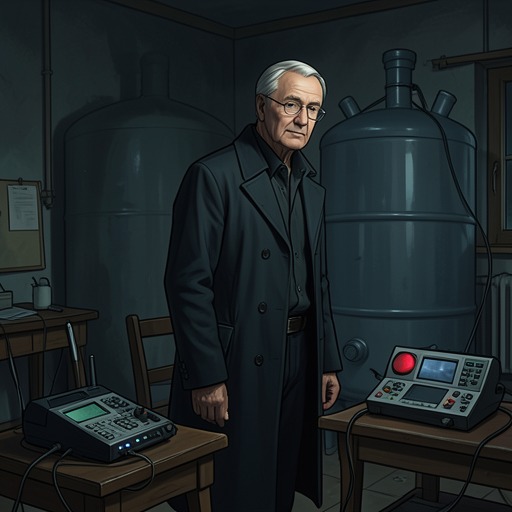
The Water-Tank Apparatus
Investigators recover fragments of a tape recorder and a harness from the water tank at [42 Acacia Drive](entity:location-recall-location-42-acacia-drive-cee24fb4c45a). The upper rooms appear designed to isolate and confine people, while the tank suggests a more extreme method of disorientation.
The physical evidence remains difficult to interpret, and the narrator has no clear lead tying it to [Jay](entity:character-recall-character-jay-254ab4914272). The house becomes known as the “haunted house,” a label that masks the systematic psychological abuse carried out there.
after the raid, at a meeting in a London club
Ross’s Offer of the File
[Ross](entity:character-recall-character-ross-05695d7833ca) asks the narrator to buy the [Al Gumhuria file](entity:object-recall-object-al-gumhuria-f8313a1f773b), claiming that his own department lacks the money to continue a valuable intelligence operation. The narrator recognizes that Ross is effectively offering to sell information that belongs to the government.
He refuses and confronts Ross over the ethics and motives behind the offer. The refusal further strains their relationship, but it also becomes a test of whether the narrator is willing to channel intelligence to [Jay](entity:character-recall-character-jay-254ab4914272) or another interested party.
shortly after Ross’s offer
The Mysterious Recording
At a [War Office](entity:location-recall-location-war-office-263f56bd608d) screening, [Ross](entity:character-recall-character-ross-05695d7833ca) shows the narrator and others an unclear silent film of men indoors, offering almost no explanation. The narrator suspects that Ross is withholding information and resents the secrecy between departments.
[Keightley](entity:character-recall-character-keightley-7302444f4e44) later reveals that the search at Acacia Drive uncovered a reel of tape. Its indistinct human sounds may be recordings of people speaking or suffering in their sleep, evidence that the house’s occupants were subjected to a carefully staged psychological process.
summer, after the recording is found
Jean Joins the Unit
The narrator meets [Jean Tonnesen](entity:character-recall-character-jean-tonnesen-7326dd9a0ac7) at [Lederer’s coffee-house](entity:location-recall-location-lederer-s-coffee-hou-871d90f29345) and learns that [Alice](entity:character-recall-character-alice-c37947fad76f) has assigned her as his assistant. [Jean](entity:character-recall-character-jean-3b22ff98bd2e) brings extensive language skills and experience in the Far East, along with a security record that the narrator checks before accepting her.
Their easy conversation and immediate attraction develop alongside her professional competence. She has already served in [Dalby](entity:character-recall-character-dalby-5a59a32bd6e9)’s organization, and her arrival gives the narrator a new colleague who may also be difficult to read.
shortly after Jean arrives
A Warning from Dalby’s Return
The narrator glimpses [Dalby](entity:character-recall-character-dalby-5a59a32bd6e9) in the street with [Jay](entity:character-recall-character-jay-254ab4914272) and is unsettled by the sight. That night Dalby returns to the office and announces that the narrator will accompany him to an American nuclear test at [Tokwe Atoll](entity:location-recall-location-tokwe-atoll-4da37dcc90f5), with [Jean](entity:character-recall-character-jean-3b22ff98bd2e) and [Chico](entity:character-recall-character-chico-95076a555580) involved in preparations.
Dalby dismisses [Carswell](entity:character-recall-character-carswell-7778d5bb8db4)’s work as unhelpful and orders him and [Murray](entity:character-recall-character-murray-116551669049) away from the department. The narrator senses that important decisions are being made around him, while Dalby’s renewed presence complicates his understanding of who is in control.
during the summer, before the scheduled test
Arrival at Tokwe
The narrator, [Dalby](entity:character-recall-character-dalby-5a59a32bd6e9), and [Jean](entity:character-recall-character-jean-3b22ff98bd2e) arrive at [Tokwe Atoll](entity:location-recall-location-tokwe-atoll-4da37dcc90f5), where the Americans have built a vast scientific and military installation in a short time. The visitors receive special access badges and are briefed on the planned high-yield explosion and the systems intended to obscure its signature.
The project’s scale and security make the atoll feel like a self-contained world. The narrator sees that access is carefully controlled and that the scientific test may be connected to the intelligence leak Dalby has come to investigate.
the first evening at Tokwe
The American Leak Crisis
At a conference, the narrator learns that classified scientific findings are reaching the other side almost as soon as they are produced. [Skip Henderson](entity:character-recall-character-skip-henderson-a6e48253d369) explains that the leaks now cover a broad range of military and nonmilitary research, making a single compromised laboratory an unlikely explanation.
The scale of the breach means the source may lie inside a larger intelligence or personnel network. [Jean](entity:character-recall-character-jean-3b22ff98bd2e) listens closely, and the narrator recognizes that the Americans are sharing only a limited view of the problem with their British visitors.
the first night at Tokwe
Barney’s Coded Farewell
The narrator encounters [Barney Barnes](entity:character-recall-character-barney-barnes-76b3898a8812) at the officers’ club, where Barney pretends they share an old friendship and offers a stream of invented memories. The narrator realizes that the familiar stories are a coded warning and that Barney cannot speak openly.
Barney hints that he is under surveillance and is about to leave the atoll. The exchange confirms the narrator’s suspicion that someone is monitoring his movements and that the people around him may be acting under orders rather than freely.
the next day, at the Tokwe test tower
Barney Warns the Narrator
Barney meets the narrator at the top of the test tower with a gun trained on him. He says the narrator is suspected of working for the [KGB](entity:organization-recall-organization-80c01782124e) and is being watched, then decides to trust his own judgment and tell him to leave the island quickly.
Barney arms the narrator and gives him ammunition, explaining that his own sergeant is impersonating him elsewhere to preserve the secret meeting. The warning transforms the narrator’s unease into a direct threat: people within the intelligence system may be preparing to dispose of him.
the evening after Barney’s warning
The Bunker’s Hidden Cache
[Jean](entity:character-recall-character-jean-3b22ff98bd2e) takes the narrator to a Japanese wartime bunker where she followed [Dalby](entity:character-recall-character-dalby-5a59a32bd6e9) the previous night. Inside, they find a new box containing electronic components, a machine pistol, and a message with a very-low-frequency wavelength, a compass bearing, and Russian writing referring to a [neutron bomb](entity:object-recall-object-9c9ec5529f0a).
The cache connects the test at [Tokwe](entity:location-recall-location-tokwe-30274349c6c9) to a covert effort to observe or exploit the explosion. The narrator destroys the envelope but leaves the equipment, choosing to learn what he can before alerting anyone who may be involved.
during the walk back from the bunker
The KGB Suspicion Explained
[Jean](entity:character-recall-character-jean-3b22ff98bd2e) tells the narrator that an intelligence department believes he is working for the [KGB](entity:organization-recall-organization-80c01782124e). [Dalby](entity:character-recall-character-dalby-5a59a32bd6e9) has not fully endorsed the accusation, but the Americans are willing to believe it because the narrator previously killed American naval personnel in a mistaken operation.
The narrator reasons that he has no KGB contact and that the accusation is itself part of a trap. Jean reveals that Dalby has ordered [Carswell](entity:character-recall-character-carswell-7778d5bb8db4) and [Murray](entity:character-recall-character-murray-116551669049) isolated, suggesting that the suspicious statistical work may have drawn attention to the real conspiracy.
Thursday evening, before the explosion
The Test-Night Party
At a party hosted by the island’s commanding general, [Dalby](entity:character-recall-character-dalby-5a59a32bd6e9) discusses the danger of treating nuclear power as a matter of mere technical competition. Their conversation leaves the narrator uncertain whether Dalby is warning him about international politics or about the immediate operation on the island.
The narrator later receives two coded cables: one offers money and escape assistance, while the other, from [Charlie Cavendish](entity:character-recall-character-charlie-cavendish-912e105ed078), points him to a passage in Julius Caesar. The message from Charlie warns him to look for conspiracy, and the narrator follows the reference rather than trusting the apparent safety of the party.
2:12 a.m., the night of the test
Barney’s Death
Driving toward the restricted test area, the narrator finds that [Dalby](entity:character-recall-character-dalby-5a59a32bd6e9) has gone ahead while the road is closed to him. As he waits, he discovers heavy asbestos gauntlets in the car, but does not understand their significance before the sky suddenly erupts in a blinding flash.
A guard has been electrocuted in a tower connected to the high-voltage line, and the narrator is arrested nearby. He later learns that the dead soldier was [Barney Barnes](entity:character-recall-character-barney-barnes-76b3898a8812), killed while the operation was being carried out.
the hours after the explosion
Interrogation on Tokwe
The narrator is beaten and held in a locked room, then brought before the American Brigadier. [The Brigadier](entity:character-recall-character-the-brigadier-25c0a54da14c) treats him with a mixture of hospitality and suspicion, showing him photographs of the soldier who died and making clear that the narrator is considered a serious security threat.
The Brigadier asks him to explain his movements and offers the chance to demonstrate his innocence. The narrator is too injured and disoriented to control what happens, while the familiar time on his broken watch—4:22—becomes an anchor in an increasingly uncertain reality.
the following day on Tokwe
The High-Speed Camera Evidence
[The Brigadier](entity:character-recall-character-the-brigadier-25c0a54da14c) explains that a high-speed television camera transmitted images of the test tower and surrounding area to a receiver, possibly aboard a submarine. The flare, the signal, and the narrator’s presence appear to implicate him in an attempt to collect secret imagery of the experiment.
The narrator understands that the device was designed to record the [neutron bomb](entity:object-recall-object-9c9ec5529f0a)’s effects, not merely its initial flash. The Americans have recovered fingerprints on the equipment that appear to be his, though he insists he never touched it; the evidence has been arranged to point directly at him.
after several days of interrogation
Secret Deportation to Hungary
A Hungarian-speaking American officer presents the narrator with a deportation order, claiming that Britain has exchanged him for American airmen and that he is being sent to Hungary. The narrator is drugged and transported while barely conscious, unable to establish where he is going or who is handling him.
He wakes in a filthy cell and is subjected to a routine of hunger, exhaustion, punishment, and confusing instructions. The apparent transfer to a foreign prison deepens his isolation and makes him question whether any of the authorities he encounters are genuine.
the first weeks of captivity
K.K.’s Conditioning Routine
[K.K.](entity:character-recall-character-k-k-5ecbf7f50c7c) visits the narrator with arbitrary statements about colors and objects, punishing him when he fails to repeat or remember them. Food, sleep, warmth, and human contact are withheld or granted unpredictably, gradually weakening the narrator’s ability to reason and resist.
The narrator scratches a calendar into the door and counts the strange noises from other prisoners. The routine resembles a controlled psychological experiment, designed to break certainty and replace it with dependence on the captors’ rules.
around the twenty-fifth day of captivity
The False Embassy Visit
A Hungarian captain arranges a brief meeting with a man claiming to represent the British Embassy. The supposed official says there is no record of the narrator as a British citizen and warns him not to expect help, while repeatedly fishing for information about [Dalby](entity:character-recall-character-dalby-5a59a32bd6e9)’s organization.
The narrator recognizes that the visit is meant to convince him that he has been abandoned. He tests the man with everyday details and remains unconvinced, but the performance intensifies the prisoner’s isolation and makes the captivity harder to interpret.
about the thirty-fifth day of captivity
The Escape from the Cell
The narrator realizes that the old guard is the only person who regularly breaks the rules by letting him rest. When the chance comes, he strikes the guard with the cell door, takes his uniform, and slips into the house.
He shorts an electrical circuit with a sixpence to create a blackout, climbs through a window, and escapes over a garden wall. The escape is precarious and exhausting, but it interrupts the conditioning before his identity and judgment can be completely dismantled.
the night of the escape
Alf Keating’s Garden
Outside, the narrator becomes tangled in a neighbor’s garden supports and is confronted by Alf Keating. He improvises a story about escaping a drunken brother-in-law and being late for night work, hoping to make himself seem ordinary rather than dangerous.
Alf lends him a little money and allows him to wash before leaving. The encounter provides the first fragile step back into the outside world, though the narrator is still weak, hunted, and unsure how far from [London](entity:location-recall-location-london-420923d4a60a) he has been held.
the day after the escape
Charlie’s Safe Welcome
The narrator contacts [Charlie Cavendish](entity:character-recall-character-charlie-cavendish-912e105ed078), who recognizes his voice and agrees to meet him at a Turkish bath. Charlie supplies clean clothes and takes him home, where food, rest, and the familiar company of books and music help restore the narrator’s strength.
The narrator does not tell Charlie the whole story, wary of involving a trusted civilian contact. He considers the danger of approaching [Dalby](entity:character-recall-character-dalby-5a59a32bd6e9) or anyone else in the service, but gradually concludes that he must return to the investigation rather than disappear.
the following week
The Secret Identity Cache
The narrator retrieves a package containing passports, bank documents, money, a police warrant card, and other carefully prepared identities. He also collects cash and weapons from safe-deposit arrangements and retrieves a bag of clothing from a pawnshop.
These resources are a private fallback plan, an insurance policy against being cut off from the service. The narrator uses them to move through [London](entity:location-recall-location-london-420923d4a60a) without relying on official channels, while still hoping to reach someone who can help expose what happened.
after the narrator recuperates
Charlie’s Records Search
At the narrator’s request, Charlie searches for [Carswell](entity:character-recall-character-carswell-7778d5bb8db4)’s official records. He finds no matching service identity, only an unrelated man with a similar name, suggesting that the Carswell known to the narrator may not exist in the records Charlie can access.
The discovery deepens the narrator’s suspicion that people around him have been assigned constructed identities. Charlie refuses to demand the whole story, but his help exposes him to the danger surrounding the investigation.
the following week, late afternoon
Charlie’s Murder
Returning to Charlie’s flat, the narrator finds the rooms ransacked and Charlie dead on the landing. A distressed woman is present, and the narrator leaves before the police can take his account or identify him as a suspect.
He realizes that whoever killed Charlie may be searching for him as well. The murder turns the narrator’s private refuge into another crime scene and makes it necessary to seek help from [Dalby](entity:character-recall-character-dalby-5a59a32bd6e9)’s organization, despite his growing distrust of Dalby.
the evening of Charlie’s murder
The Route to Dalby
The narrator evades possible pursuit by switching buses and taxis, then hires a small car under Charlie’s name. He drives into the countryside toward [Dalby](entity:character-recall-character-dalby-5a59a32bd6e9)’s converted farmhouse, followed by the private detective [Waterman](entity:character-recall-character-waterman-c01fb216322e), whom he has hired as a precaution.
Dalby receives him without surprise, feeds him, and explains that [Jay](entity:character-recall-character-jay-254ab4914272) has been trying to sell the narrator back to the British. Dalby says that Jay may also have [Chico](entity:character-recall-character-chico-95076a555580), and that someone in the American Medical Department helped arrange the narrator’s capture.
that evening, at Dalby’s farmhouse
Dalby’s Explanation
[Dalby](entity:character-recall-character-dalby-5a59a32bd6e9) claims that he did not intervene sooner because the captors might have killed the narrator, whom [Jay](entity:character-recall-character-jay-254ab4914272) valued as a bargaining asset. The narrator listens but does not tell Dalby about Charlie’s murder, wary of revealing how much he knows.
Dalby gives him files concerning financial networks and asks him to report back the next morning. The exchange seems almost normal, but the narrator’s unresolved suspicions and the danger of Charlie’s death push him to investigate Dalby’s visitors before trusting him.
later that night
The Farmhouse Visitors
From outside [Dalby](entity:character-recall-character-dalby-5a59a32bd6e9)’s farmhouse, the narrator watches Dalby speaking with [Murray](entity:character-recall-character-murray-116551669049) and a Chinese-looking man he recognizes as [K.K.](entity:character-recall-character-k-k-5ecbf7f50c7c), the captor who controlled his cell. Then [Jay](entity:character-recall-character-jay-254ab4914272) enters the room, linking the kidnapping, the secret detention, and Dalby’s private dealings.
Murray catches the narrator in the garden and reveals that his name is Harriman and that he is a lieutenant-colonel in a special intelligence unit. Before he can explain further, [Waterman](entity:character-recall-character-waterman-c01fb216322e) knocks him unconscious with a spanner, forcing the narrator to flee with the detective.
that night, after the farmhouse
Jay’s London Residence
The narrator and [Waterman](entity:character-recall-character-waterman-c01fb216322e) follow [Jay](entity:character-recall-character-jay-254ab4914272)’s Rolls-Royce into [London](entity:location-recall-location-london-420923d4a60a), where armed men intercept them at a converted house. Their weapons are taken, and Jay orders that Waterman be paid for his work and sent away.
The narrator is brought inside to meet Jay, who is not found in a laboratory or a hideout but calmly preparing a lobster in an immaculate kitchen. The domestic scene heightens the contrast between Jay’s polished manners and the people-selling enterprise he directs.
during the meeting at Jay’s house
Jay’s Thought-Reform Doctrine
Over champagne and the lobster he is cooking, [Jay](entity:character-recall-character-jay-254ab4914272) describes his business as the exchange of talented people who supposedly choose new employment. He argues that political systems, not weapons themselves, determine what should be feared, and suggests that thought reform can be a tool for managing people who threaten society.
The narrator recognizes that Jay has processed hundreds of people and may see coercion as a rational social advance. Jay neither offers a simple confession nor denies the operation; instead, he treats the narrator as a political interlocutor and presents the scheme as a practical new instrument of power.
later that evening
Ross Arrives for Jay
The police radio reports that officers are closing in on [Jay](entity:character-recall-character-jay-254ab4914272)’s residence, and Jay tells the narrator that everyone involved bears responsibility for Charlie’s death. [Ross](entity:character-recall-character-ross-05695d7833ca) arrives with policemen and takes Jay into custody, while the narrator realizes that Ross has been directing a larger operation than he had admitted.
Jay is removed to a secure facility, and Ross begins to coordinate the arrests. The narrator’s arrival and the chain of evidence have exposed a conspiracy that joins the disappearances, coercive detention, and manipulation of intelligence agencies.
the night and morning after Jay’s arrest
The Network Is Rounded Up
[Ross](entity:character-recall-character-ross-05695d7833ca) organizes the detention of the conspirators and arranges additional secure locations as the first holding facility fills. [Murray](entity:character-recall-character-murray-116551669049), now acting openly on Ross’s authority, reports that he has detained Swainson, the man known to the narrator as [K.K.](entity:character-recall-character-k-k-5ecbf7f50c7c)
[Chico](entity:character-recall-character-chico-95076a555580) is recovered from near Grantham, where he had gone after recognizing a man in the film and approaching him without authorization. His action accidentally exposed another member of the network, while the narrator learns that [Carswell](entity:character-recall-character-carswell-7778d5bb8db4)’s statistical work had pointed toward the truth.
the morning after the arrests
The IPCRESS Methods Revealed
[Jean](entity:character-recall-character-jean-3b22ff98bd2e) and the narrator reconstruct the operation. [The “haunted house” system](entity:concept-recall-concept-9858b7e120c5) used isolation, unpredictable conditions, false officials, and exhaustion; other methods used private nursing homes, fever, and drug-induced collapse to make subjects more susceptible to suggestion.
The narrator explains that the goal was not simply to turn the victims into conventional foreign agents. [Jay](entity:character-recall-character-jay-254ab4914272) intended to build a network whose members would remain personally loyal to him and pass information through him, while the resulting suspicion among rival services would help conceal the operation.
during the same explanation
Jay’s Motive and the Concens
The narrator concludes that [Jay](entity:character-recall-character-jay-254ab4914272)’s shifting political history left him loyal chiefly to his own survival and profit. He had progressed from selling secrets and arranging defections to building a network of manipulated people who could provide information without understanding who ultimately benefited.
[Carswell](entity:character-recall-character-carswell-7778d5bb8db4)’s “concens” were groups of important people gathered in covert treatment settings, often after being weakened by fever. His statistical work had revealed a pattern that ordinary surveillance missed, making him one of the few people able to estimate how extensive the operation might be.
the days after the roundup
Jay’s Payment and Dalby’s Death
[Jay](entity:character-recall-character-jay-254ab4914272) agrees to cooperate and is paid £160,000 to establish a department working between [Ross](entity:character-recall-character-ross-05695d7833ca) and the narrator. The arrangement places him under scrutiny while allowing the authorities to use his knowledge of the remaining network.
[Dalby](entity:character-recall-character-dalby-5a59a32bd6e9) dies when his sports car leaves the road on the Maidstone bypass. The narrator suspects that money, power, and the rivalry between Dalby and Jay mattered more than any neat theory of ideological conversion, but the full explanation for their relationship remains uncertain.
after the arrests
The Tokwe Deception Reconstructed
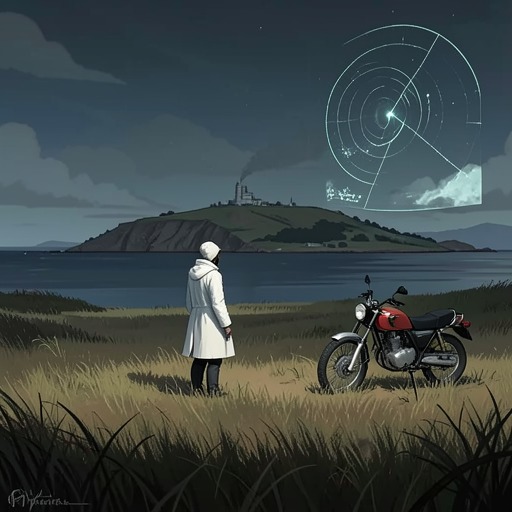
The American Brigadier returns to [London](entity:location-recall-location-london-420923d4a60a) and demonstrates how [Dalby](entity:character-recall-character-dalby-5a59a32bd6e9) framed the narrator at [Tokwe](entity:location-recall-location-tokwe-30274349c6c9). A small motorcycle carried a decoy apparatus across the road, while the high-speed television unit was used to suggest that the narrator had transmitted images from the test area.
The device was dumped near the narrator’s car and Dalby relied on the resulting confusion, planted evidence, and compromised American and British channels to ensure suspicion fell on him. The motorcycle and its attached wooden contraption are eventually recovered, confirming [Jean](entity:character-recall-character-jean-3b22ff98bd2e)’s reconstruction of the trick.
during the investigation’s resolution
Charlie’s Killer Identified
The narrator explains that Charlie was killed because a hoodlum working for [Jay’s network](entity:organization-recall-organization-jay-s-network-1a61c0800d5f) mistook him for the narrator after he wore the narrator’s light-blue raincoat. The murder was not a deliberate punishment for Charlie’s intelligence work, but a fatal error made during an attempt to reach the narrator.
[Jay](entity:character-recall-character-jay-254ab4914272) had hurried to [Dalby](entity:character-recall-character-dalby-5a59a32bd6e9) after learning of Charlie’s connection to [C-SICH](entity:organization-recall-organization-c-sich-77ee7a62fcc5), hoping to contain the consequences. The narrator’s chance remark about a Chinese visitor led him back to Dalby’s house and exposed the meeting that brought the larger conspiracy into view.
after the conspiracy is exposed
Alice and Ross’s Resistance
The narrator tells the American Brigadier that [Alice](entity:character-recall-character-alice-c37947fad76f) and [Ross](entity:character-recall-character-ross-05695d7833ca) were difficult targets for thought reform because their obsessive habits made them resistant to the techniques used on other subjects. He asks the Brigadier not to repeat the explanation, though he suspects the information will spread anyway.
The observation offers an imperfect explanation for why senior figures in the British service remained outside [Jay](entity:character-recall-character-jay-254ab4914272)’s control. It also underlines the narrator’s broader point that psychological methods do not erase individual differences or guarantee obedience.
after the operation concludes
The Minister’s First Questions
The narrator returns to the Minister, who is less interested in a full account than in answers that might help him manage parliamentary questions. He asks casual questions about [Lebanon](entity:location-recall-location-lebanon-77be8160c97f) and acquaintances, and the narrator gives him the story in his own terms.
The framing conversation confirms that the official record will not contain every detail. The narrator’s account remains deliberately incomplete, shaped by secrecy and by his belief that no single version can capture the whole affair.
after the Minister’s interview
The Jailer’s Escape
The narrator visits the old man who had guarded him at [Wood Green](entity:location-recall-location-wood-green-a5a2acab8b5d) and gives him money and forged British passports. The man thanks him and says that he can be found at a Moscow address associated with [SMERSH](entity:organization-recall-organization-smersh-5380f889b096).
The narrator allows his former jailer to leave for Prague, treating the act as another form of intelligence insurance. The gesture does not erase the man’s role in the captivity, but it preserves a channel that may prove useful in the dangerous world the narrator continues to inhabit.
near the ending
The Unclosed Henry File
The narrator takes the slim [Henry](entity:character-recall-character-henry-c166031952d6) file from the senior military official and insists that the matter belongs under Cabinet authority. He is determined not to let the file disappear into the same institutional channels that failed to explain who warned [Jay](entity:character-recall-character-jay-254ab4914272).
Henry remains unidentified, and the narrator ends with the suspicion that the informer may be connected to [Chico](entity:character-recall-character-chico-95076a555580)’s circle. The conspiracy has been exposed, but its highest-level leak and several of its consequences remain unresolved.
the final days of the story
Charlotte Street Returns to Routine
The narrator receives long-overdue back pay, repays small debts, and resumes ordinary office work. [Alice](entity:character-recall-character-alice-c37947fad76f) gets a coffee mill, [Jean](entity:character-recall-character-jean-3b22ff98bd2e) repairs his trousers, and [Chico](entity:character-recall-character-chico-95076a555580) thanks him for completing the requisitions he had neglected.
[Jay](entity:character-recall-character-jay-254ab4914272) attends intelligence meetings under supervision, while the remaining people affected by the operation remain a continuing concern. The narrator still sees Jay and occasionally thinks of [Dalby](entity:character-recall-character-dalby-5a59a32bd6e9)’s claim that they were approaching the same conclusion from opposite directions, but he doubts that the phrase meant what Dalby had implied.
near the ending
The Final Dinner Invitation
[Jay](entity:character-recall-character-jay-254ab4914272) invites the narrator and [Jean](entity:character-recall-character-jean-3b22ff98bd2e) to dinner, offering to cook for them himself. The narrator considers going but decides against creating too many intimate ties in a profession built on concealment and shifting loyalties.
The refusal leaves the story with a deliberately unsettled balance: Jay is both a captured conspirator and a useful intelligence asset, while the narrator and Jean continue their partnership amid unresolved secrets. The affair ends operationally, but not with complete trust or certainty.